
What Are the 10 Heavenly Stems in Da Liu Ren

The 10 Heavenly Stems in Da Liu Ren are the fundamental spacetime coordinates that represent the core subject, external events, and dynamic energy states of a divination chart. They act as the primary variables to decode relationships, timing, and outcomes in a reading.
What is 10 Heavenly Stems in Da Liu Ren
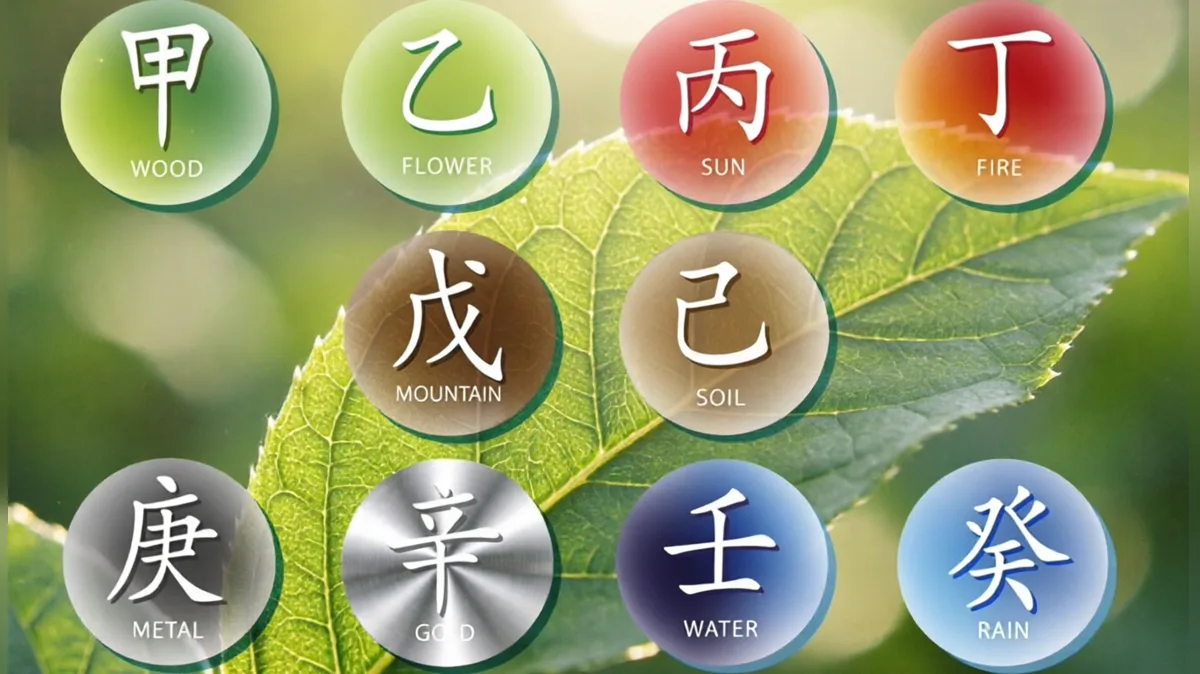
The 10 Heavenly Stems (Jia, Yi, Bing, Ding, Wu, Ji, Geng, Xin, Ren, Gui) represent the “Heavenly” or manifest aspects of reality. In the context of Da Liu Ren (大六壬), one of the highest forms of Chinese strategic divination, the Heavenly Stems play a specific and critical role. They do not exist merely as abstract elements; they are active forces mapped onto a spatial board.
Unlike BaZi (Four Pillars of Destiny) which uses Stems to define a person’s lifelong psychological and energetic makeup, Da Liu Ren uses the Heavenly Stem of the specific day the question is asked (the Day Stem or 日干) to represent the Querent (the person asking the question). The Stems define the “Guest” (客) in a situation, representing active, moving, and external factors, while the Earthly Branches represent the “Host” (主), the passive, static, and internal environment.
How 10 Heavenly Stems in Da Liu Ren Works
Da Liu Ren operates on a complex computational model. The Heavenly Stems function within this model through several specific mechanisms:
The Day Stem as the Querent
The Heavenly Stem of the day the reading is cast represents the person initiating the action or asking the question.
Parasitic Palaces (Gan Ji Gong – 干寄宫)
Heavenly Stems do not have their own physical spaces on the 12-palace Earthly Branch board. To interact with the board, they must “parasitize” or hide within specific earthly branches. This mapping is vital for calculating the four classes (四课):
- Jia hides in Yin.
- Yi hides in Chen.
- Bing and Wu hide in Si.
- Ding and Ji hide in Wei.
- Geng hides in Shen.
- Xin hides in Xu.
- Ren hides in Hai.
- Gui hides in Chou.
Generating the Four Classes (四课)
The relationship between the Day Stem (representing the Querent) and its Parasitic Palace forms the 1st and 2nd Classes. The relationship between the Day Branch (representing the environment or the other party) and its corresponding palace forms the 3rd and 4th Classes. This creates the foundational matrix for conflict and resolution.
Elemental Interactions
The Stems interact using the 5 Elements (Wood, Fire, Earth, Metal, Water) through generating (producing) and overcoming (controlling) cycles. These interactions dictate whether an outcome is favorable, hostile, or neutral.
Key Components of 10 Heavenly Stems in Da Liu Ren
The 10 Heavenly Stems in Da Liu Ren are highly specific in their meanings. Below is the structured breakdown of each Stem:
1. Jia (甲) – Yang Wood
- Parasitic Palace: Yin (寅)
- Core Meaning: The leader, new beginnings, straight forward action.
- Business/Career: Represents the CEO, the initiator of a project, upward mobility, and official documents.
- Health: The head, the gallbladder, the nervous system.
2. Yi (乙) – Yin Wood
- Parasitic Palace: Chen (辰)
- Core Meaning: Flexibility, networks, winding paths, bending to survive.
- Business/Career: Negotiations, partnerships, navigating bureaucratic red tape, indirect strategies.
- Health: The neck, the liver, the limbs.
3. Bing (丙) – Yang Fire
- Parasitic Palace: Si (巳)
- Core Meaning: Extreme visibility, authority, sudden conflicts, and illumination.
- Business/Career: Lawsuits, public exposure, rapid expansion, aggressive marketing, the spotlight.
- Health: The shoulders, the small intestine, acute inflammations.
4. Ding (丁) – Yin Fire
- Parasitic Palace: Wei (未)
- Core Meaning: Insights, mysterious changes, movement, illumination in the dark.
- Business/Career: Secret documents, sudden shifts in the market, covert intelligence, strategic pivots.
- Health: The heart, the blood, the chest area.
5. Wu (戊) – Yang Earth
- Parasitic Palace: Si (巳)
- Core Meaning: Capital, massive assets, stagnation, the center.
- Business/Career: Real estate investments, large funds, delays in progress, immovable obstacles.
- Health: The stomach, the ribs, digestive stagnation.
6. Ji (己) – Yin Earth
- Parasitic Palace: Wei (未)
- Core Meaning: Hidden matters, personal desires, graves, slow progress.
- Business/Career: Hidden traps, internal company politics, secret agendas, slow accumulation of wealth.
- Health: The spleen, the abdomen, chronic fatigue.
7. Geng (庚) – Yang Metal
- Parasitic Palace: Shen (申)
- Core Meaning: Obstacles, severance, military/police, sharp cuts.
- Business/Career: Hostile takeovers, severing partnerships, strict regulatory actions, aggressive competition.
- Health: The lungs, the large intestine, bones, physical injuries.
8. Xin (辛) – Yin Metal
- Parasitic Palace: Xu (戌)
- Core Meaning: Mistakes, reform, innovation, fine details, sharp but small issues.
- Business/Career: Reorganization, correcting past errors, technological innovation, legal technicalities.
- Health: The thighs, the respiratory tract, subtle pain.
9. Ren (壬) – Yang Water
- Parasitic Palace: Hai (亥)
- Core Meaning: Large-scale movement, unconstrained flow, travel.
- Business/Career: Logistics, shipping, massive data transfer, lack of boundaries, volatile markets.
- Health: The bladder, the calves, fluid retention.
10. Gui (癸) – Yin Water
- Parasitic Palace: Chou (丑)
- Core Meaning: Closure, hidden networks, deep secrets, endings.
- Business/Career: The final stages of a project, hidden financial streams, confidential closures, covert operations.
- Health: The kidneys, the feet, reproductive system.
Why It Matters
Understanding the 10 Heavenly Stems is non-negotiable for executing a Da Liu Ren calculation. They act as the primary variables for decision-making intelligence.
Core Use Cases Include:
- Predicting Business Negotiations: The Day Stem represents your company. The Day Branch represents the opposing company. Analyzing the relationship between the Stem and Branch reveals who holds the leverage.
- Timing of Events: Heavenly Stems are used to calculate the exact timing of when a delayed project will execute or when a hidden threat will manifest.
- Identifying Key Players: In a corporate conflict, the Heavenly Stems appearing in the Three Transmissions (San Chuan – 三传) pinpoint exactly who is helping you (e.g., a leader represented by Jia) and who is sabotaging you (e.g., a hidden competitor represented by Gui).
- Medical Diagnosis: The Stems map directly to human anatomy and organ systems, allowing the practitioner to identify the root cause of a physical ailment based on the divination chart.
Example
Scenario: A tech startup CEO asks, “Will our merger with a larger corporation succeed?”
Date of Question: A Jia-Zi (甲子) day.
Analysis via Stems:
- The Querent: The Day Stem is Jia (甲). Jia represents the CEO—upward seeking, initiating, and straightforward.
- The Other Party: The Day Branch is Zi (子). Zi represents the large corporation.
- The Interaction: In the Five Elements, Zi (Water) produces Jia (Wood).
- The Conclusion: Because the Branch (the larger corporation) produces the Stem (the startup CEO), the larger corporation is actively willing to support and nourish the startup. The merger will succeed, and the terms will heavily favor the startup CEO.
FAQ
Can I use BaZi knowledge of the Heavenly Stems directly in Da Liu Ren?
Only partially. While the elemental attributes (e.g., Jia is Wood) remain the same, Da Liu Ren introduces unique mechanics like Parasitic Palaces (干寄宫) which dictate how Stems operate spatially. Da Liu Ren relies heavily on real-time event mapping rather than lifelong character analysis.
Why do some Stems share the same Parasitic Palace?
In Da Liu Ren, Fire and Earth elements share the same evolutionary cycle. Therefore, Bing (Fire) and Wu (Earth) both parasitize at Si, while Ding (Fire) and Ji (Earth) both parasitize at Wei. This reflects the ancient Chinese cosmological view that Earth is born from the ashes of Fire.
What happens if the Day Stem is controlled by the Day Branch?
If the Day Branch (the environment/other person) controls the Day Stem (the querent) based on the Five Elements cycle, it indicates a highly unfavorable situation. That is one traditional symbolic relationship to examine. It cannot establish the severity or outcome of a situation without the full chart and relevant real-world evidence.
Are Heavenly Stems more important than Earthly Branches in Da Liu Ren?
They are equally important but serve different functions. Stems represent the active, visible, and initiating forces (Guest). Branches represent the passive, foundational, and receiving forces (Host). A reading requires the integration of both.