
Decoding the Simulation: Elon Musk’s Bazi and the “Source Code” of a Visionary

How Elon Musk’s Four Pillars of Destiny reveal the energetic architecture behind Tesla, SpaceX, and his most controversial decisions.
Why Elon Musk and the Simulation Theory Still Fascinate the World
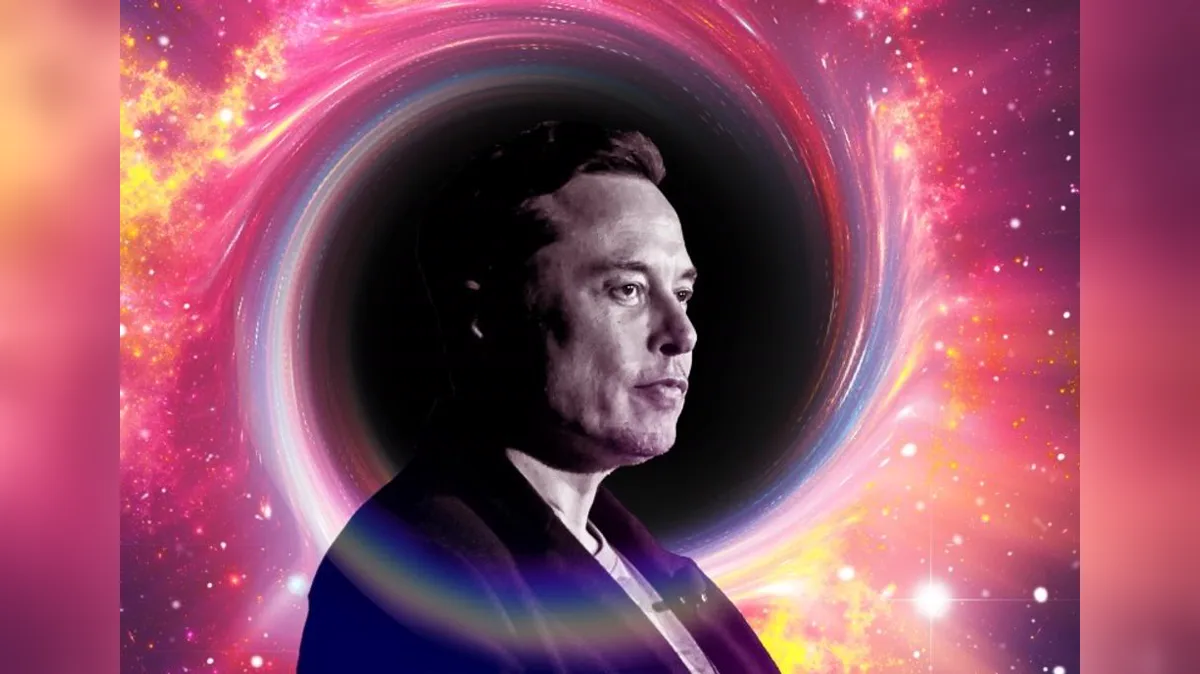
Elon Musk has repeatedly said that the probability we are living in base reality is “one in billions.” The idea that our universe may be a sophisticated simulation isn’t just philosophical entertainment for him — it mirrors how he thinks: systems, code, first principles.
But if life operates like a program, what is the hidden architecture behind Musk’s relentless expansion into electric vehicles, private spaceflight, AI, and social media?
From an Eastern metaphysical lens, that architecture is called Bazi (Four Pillars of Destiny) — a classical system used for strategic timing, personality mapping, and decision analysis.
This article explores a long-tail perspective rarely covered in mainstream business analysis:
How Elon Musk’s Bazi chart explains his risk tolerance, innovation drive, wealth explosion in 2020, and turbulent relationships.
Understanding Bazi: The Strategic Blueprint Behind Personality and Timing
For readers searching terms like “Elon Musk Bazi chart analysis” or “Four Pillars of Destiny for entrepreneurs,” here’s the foundation:
Bazi maps a person’s birth data into four pillars (Year, Month, Day, Hour).
These pillars describe:
- Core personality structure
- Risk appetite and stress response
- Wealth accumulation cycles
- Relationship dynamics
- 10-year strategic timing phases (Luck Pillars)
Unlike superstition, serious practitioners treat Bazi as a decision-support timing system, not fortune-telling.
Core Identity: Jia Wood — The Uncompromising Growth Code
Born June 28, 1971, Musk’s Day Master is widely calculated as Jia Wood (甲木) — Yang Wood.
What Does Jia Wood Represent?
Jia Wood symbolizes a towering tree:
- Relentless upward growth
- Structural integrity under pressure
- Direct, linear problem-solving
- Resistance to compromise
A large tree doesn’t stop growing when it meets stone — it splits it.
This maps directly to Musk’s historical behavior:
- After three early launch failures at SpaceX
- During near-bankruptcy moments at Tesla
- Sleeping inside the Tesla factory during production crises
Jia Wood personalities rarely retreat. They expand or collapse — there is no middle mode.
The Rule-Breaker Configuration: Hurting Officer Meets Seven Killings
One of the most distinctive features in Musk’s chart is the interaction between:
- Hurting Officer (伤官) — rebellion, innovation, disruption
- Seven Killings (七杀) — crisis pressure, aggression, high-risk execution
Hurting Officer: The Disruptive Innovator
Born in a Fire month (Wu), Fire represents Hurting Officer for Wood.
This configuration is often seen in:
- Tech disruptors
- Radical founders
- Individuals who challenge regulatory structures
It explains why Musk repeatedly enters entrenched industries:
- Automotive
- Aerospace
- Satellite internet
- Social media
His acquisition of Twitter (now rebranded as X) reflects classic Hurting Officer behavior:
Break structure. Redesign communication architecture. Ignore precedent.
However, Hurting Officer also governs unfiltered speech — which aligns with his repeated conflicts with the U.S. Securities and Exchange Commission.
Seven Killings: The Extreme Risk Operator
His Day Branch sits on Shen Metal, activating Seven Killings energy.
Seven Killings personalities:
- Perform best under threat
- Require high stakes to stay motivated
- Are uncomfortable in stability
- Thrive in near-collapse environments
This explains Musk’s operational pattern:
- Launching rockets despite extreme capital risk
- Leveraging personal wealth into volatile ventures
- Publicly confronting regulators and competitors
He doesn’t avoid pressure — he metabolizes it.
The 10-Year Luck Pillar Shift That Preceded the 2020 Wealth Explosion
Search interest often spikes around:
- “Why did Elon Musk become richest in 2020?”
- “Tesla stock surge metaphysical timing”
- “Bazi wealth luck cycle analysis”
Let’s examine timing.
Around 2018, Musk entered the Ji Chou (己丑) Luck Pillar.
For Jia Wood:
- Earth element = Wealth element
This means his 10-year macro cycle shifted into a capital accumulation phase.
2020: The Geng Zi Alignment and Financial Detonation
In 2020 (Geng Zi year):
- Metal strengthened execution power
- Zi Water cooled excessive Fire
- Structural combinations activated between Shen–Zi and Zi–Chou
From a Bazi timing perspective, this created:
- Balance in an overheated summer chart
- Liquidity amplification
- Asset consolidation
In real-world terms:
- Tesla stock surged over 700%
- Musk briefly became the world’s richest individual
This wasn’t random luck—it was cyclical alignment between:
- Personal 10-year wealth phase
- Annual liquidity trigger
- Structural compatibility in elemental flow
Timing matters as much as talent.
Relationship Volatility: Wealth Star Pressure
In classical male charts, the Wealth element also represents partner dynamics.
When:
- Wealth energy is activated
- But heavily pressured by other elements
The pattern often manifests as:
- Intense attraction
- High-profile relationships
- Instability over time
Musk’s personal life reflects this energetic pattern — powerful connections, but difficulty sustaining equilibrium.
Strategic Takeaway: Code Awareness vs. Code Control
This analysis is not deterministic.
Bazi does not claim to predict fate.
It reveals:
- Structural strengths
- Stress thresholds
- Timing advantages
- Risk windows
Just as Musk applies first-principles physics to engineering, Bazi applies structural principles to human timing.
The key question becomes:
Are you operating blindly inside your energetic architecture, or are you aligning strategy with it?
Why Entrepreneurs Are Exploring Bazi for Strategic Timing
Search trends show rising interest in:
- Bazi for business decisions
- Four Pillars for entrepreneurs
- Metaphysics in wealth timing
- Strategic astrology alternatives in Asia
High-performing founders increasingly look at timing cycles the way they examine market cycles.
Because momentum is not only financial — it is structural.
Final Reflection
Elon Musk’s ambition, resilience, volatility, and wealth acceleration are not isolated traits. They form a coherent energetic matrix.
Whether one believes in simulation theory or not, there is an undeniable pattern:
- Extreme internal drive
- Crisis-based performance
- Wealth activation aligned with macro cycles
Bazi frames this as code.
Related Reading
- Beyond Fortune Telling: How QMDJ Works – Learn about the strategic forecasting system behind this analysis.
- BaZi Day Master Explained – Understand the core element that drives personality patterns.
- What Can BaZi Reveal About Your Life Path? – Discover what BaZi analysis can uncover.
- Personal Destiny Analysis – Get your own BaZi chart professionally analyzed.
Read this way, Elon Musk’s Bazi is less a horoscope than a case study in how one chart can concentrate vision, risk appetite, and relentless drive. The same logic behind the simulation hypothesis he likes to cite applies to his own Four Pillars: once you can read the underlying code, the patterns stop looking like luck and start looking like configuration.