
Archive note, 24 September 2026: This is a cultural essay originally prepared before the 2026 tournament, not a report of verified match outcomes. Links to individual forecasts built on uncertain birth-time assumptions have been withdrawn.
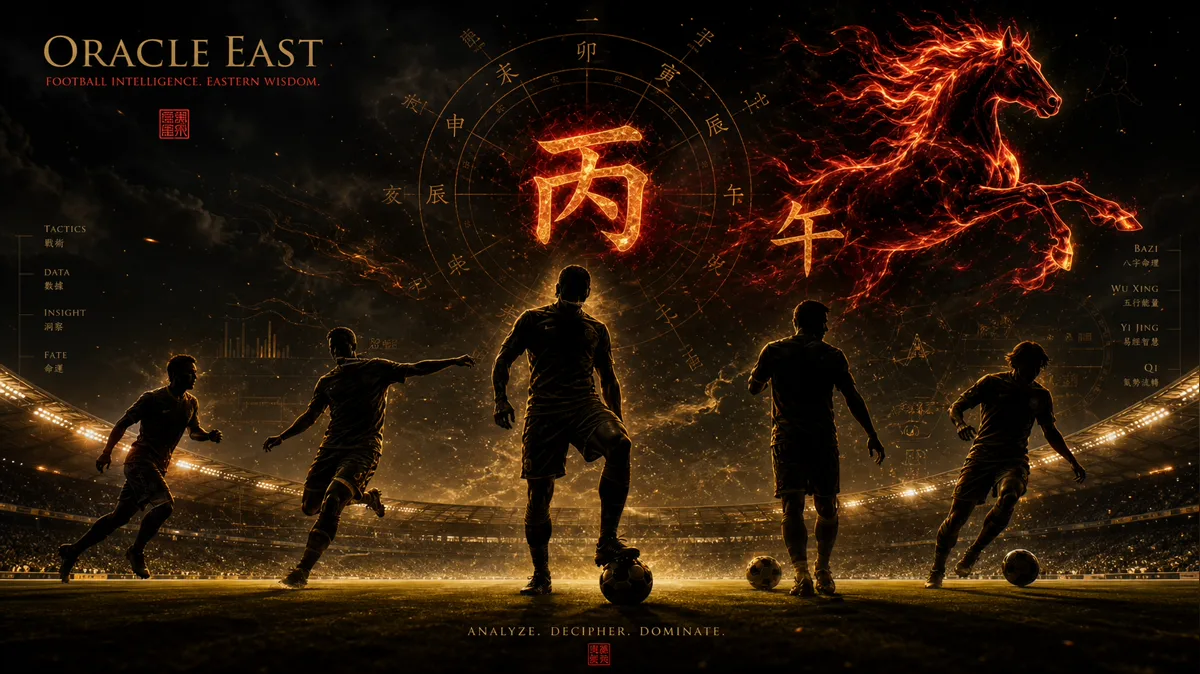
World Cup star narratives in 2026 unfold inside the Bing Wu (丙午) Fire Horse year, one of the clearest visibility-and-pressure years in the 60-jiazi cycle. FIFA’s official schedule places the FIFA World Cup 2026 from June 11 to July 19, 2026, across Canada, Mexico and the United States. In BaZi terms, that means the tournament unfolds during a year of Yang Fire over Horse Fire: speed, heat, public exposure, reputation, emotional intensity and decisive moments under global attention.
This article reads five football figures through that symbolic climate: Cristiano Ronaldo, Lionel Messi, Kylian Mbappe, Jude Bellingham and Erling Haaland. It does not claim that every player will appear at the tournament, score, win, lose or experience one fixed outcome. Final squads, injuries, qualification status and coaching choices are football realities. BaZi cannot replace them.
The purpose is different: to use BaZi as a cultural lens for World Cup star narratives. Ronaldo represents legacy pressure. Messi represents completed greatness under new heat. Mbappe represents acceleration and command. Bellingham represents early authority. Haaland represents force that needs the right timing and team structure.
TL;DR — World Cup Stars and BaZi 2026
1. 2026 is Bing Wu (丙午): Yang Fire over Horse, a year of visibility, speed, pressure and reputation.
2. World Cup 2026 is a Fire Horse stage: elite players are tested not only by talent, but by public heat and emotional control.
3. The symbolic question: when the spotlight gets hotter, does a star become clearer, or does the heat expose weak structure?
What does BaZi say about the 2026 World Cup?
BaZi reads the 2026 World Cup as a Fire Horse event: fast, visible, emotionally charged and reputation-defining. The annual pillar is Bing Wu (丙午). Bing is Yang Fire, the image of sunlight, public exposure, fame, leadership and things that cannot stay hidden. Wu is the Horse branch, associated with movement, speed, heat, performance, travel, restlessness and the noon point of maximum Fire.
A World Cup already carries these qualities. It compresses national identity, media pressure, stadium emotion, tactical decision-making and personal legacy into a few weeks. In 2026, the symbolic calendar intensifies that picture. The year asks players and teams to handle exposure.
This does not mean “Fire Horse equals victory” for one player. In Ziping BaZi, a year is never good or bad by itself. The same Fire can be useful, excessive, draining or pressurizing depending on the full chart. For a person, that requires Day Master analysis, Luck Pillars, useful elements and the complete Four Pillars.
For a public sports article, the honest method is to read archetypes rather than make hard predictions. The year tells us the climate. Football tells us the mechanics. Human timing sits where those two meet.
For a deeper background on the annual pillar itself, read Oracle East’s full guide to the 2026 Bing Wu Fire Horse year.
Why is 2026 a Fire Horse stage for football stars?
The Fire Horse year favors stars who can turn speed and attention into disciplined action. A player can have extraordinary talent and still lose the tournament emotionally: forcing shots, reacting to pressure, fighting public narratives, or becoming trapped inside an old image of himself.
Fire brings visibility. Horse brings movement. Together, they create a stage where public moments travel quickly. One goal becomes myth. One mistake becomes a global clip. One captain’s reaction becomes a national argument. One tactical weakness becomes impossible to hide.
This is especially relevant to football stars because elite football is not only physical. It is symbolic. Fans do not watch Ronaldo, Messi, Mbappe, Bellingham or Haaland only as athletes. They watch them as stories:
- the legend seeking one more defining moment
- the completed champion carrying aura
- the fastest heir asked to lead
- the young midfielder asked to become the face of a generation
- the striker whose power depends on supply, rhythm and national context
In a Fire Horse year, these stories become hotter. The public does not merely ask, “Can he play?” It asks, “Can he handle what he represents?”
What are the public BaZi year pillars of Ronaldo, Messi, Mbappe, Bellingham and Haaland?
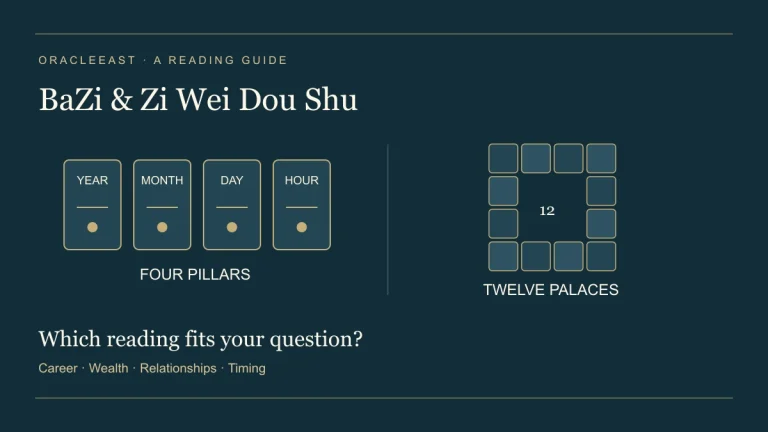
Using public birth dates only, the five players show different year-pillar symbols, but these are not complete BaZi charts. A serious BaZi reading needs birth time, birth place, Day Master, Luck Pillar, month pillar, hidden stems and chart strength. Public year pillars are useful for a symbolic blog because they describe the broad generational image, not the person’s full destiny.
| Player | Public birth date | Public birth-year pillar | 2026 World Cup archetype |
|---|---|---|---|
| Cristiano Ronaldo | February 5, 1985 | Yi Chou, 乙丑 | Legacy warrior under final-window pressure |
| Lionel Messi | June 24, 1987 | Ding Mao, 丁卯 | Completed champion protecting rhythm and grace |
| Kylian Mbappe | December 20, 1998 | Wu Yin, 戊寅 | Acceleration leader facing public command |
| Jude Bellingham | June 29, 2003 | Gui Wei, 癸未 | Young authority under national expectation |
| Erling Haaland | July 21, 2000 | Geng Chen, 庚辰 | Scoring force that needs timing and structure |
The table is a starting point, not a verdict. If you want to understand your own chart with the same logic, begin with the Oracle East BaZi astrology guide and then consider a full personal BaZi reading.
Cristiano Ronaldo: can legacy become timing?
Ronaldo’s 2026 symbolism is the test of legacy: whether old fire can still appear at exactly the right moment. Cristiano Ronaldo’s public football story is built on discipline, visibility, self-belief, scoring hunger and an unusually long performance arc. For most players, time quietly closes the door. Ronaldo has spent his career arguing with time in public.
That makes him a natural Fire Horse figure. Fire is fame and exposure. Horse is movement and competitive heat. The global audience does not only watch Ronaldo to see whether he can still run or finish. It watches to ask whether his story has one more World Cup chapter.
The opportunity is obvious: Fire can revive the performance archetype. A tournament can give an older star a small number of moments where experience matters more than constant dominance. A late goal, a penalty, a leadership moment or a perfectly timed movement can become larger than a full season of statistics.
The risk is also obvious. Fire exposes. If the role is unclear, if the body cannot match the memory, or if a team becomes emotionally organized around yesterday’s version of a star, the year can turn admiration into pressure.
Ronaldo’s best Fire Horse strategy is selectivity. In a hot year, not every spotlight is useful. The mature form of Fire is not noise. It is precision.
Lionel Messi: can completion stay calm under new heat?
Messi’s 2026 symbolism is the test of completion: whether a finished story can remain graceful under renewed attention. After Argentina’s 2022 World Cup victory, Lionel Messi’s narrative changed. He no longer carries the same unresolved burden. The old question, “Can Messi complete his destiny?” has already been answered.
That makes 2026 different. If Messi is part of the World Cup conversation, the symbolism is not hunger for proof. It is aura, preservation, memory and emotional gravity. Fire Horse energy can amplify a champion’s presence, but it can also demand more speed, more exposure and more bodily output than an older player should waste.
Messi’s public archetype is not force. It is rhythm. He changes a match by sensing space, timing and panic before others do. In a Fire Horse tournament, that calm can be extremely valuable. When the emotional temperature rises, the player who does not rush may become the most dangerous person on the pitch.
The risk is recovery and expectation. Fire wants visible action. Messi’s best late-career football has often depended on conservation: fewer wasted movements, clearer moments, less need to prove anything. A Fire Horse year may tempt the public to demand youth from a player whose true value is timing.
Messi’s best 2026 strategy is to protect rhythm. In BaZi language, not all Fire must be bigger. Sometimes the most useful flame is the one that does not flicker.
Kylian Mbappe: can acceleration become command?
Mbappe’s 2026 symbolism is the test of acceleration: whether speed becomes leadership instead of spectacle. Kylian Mbappe already carries many Fire Horse qualities in the public imagination: pace, attack, fame, transition, confidence, national expectation and a career lived in full view.
His public birth-year branch is Yin, the Tiger. In branch logic, Tiger and Horse can support a Fire frame when the wider chart allows it. This is not a prediction of automatic success, but it is symbolically striking. Mbappe’s football identity already feels like forward heat. The 2026 year can make that image louder.
The opportunity is command. Mbappe changes the geometry of a match because defenders feel time shrink around him. That is very Horse-like: movement that forces other people to move differently. In the right structure, this can turn into leadership, not just speed.
The risk is reputation heat. When a player becomes a global brand and national leader, every choice is magnified. Fire can make charisma visible, but it can also make friction visible. A captain-like figure cannot only be brilliant. He must be emotionally readable in a way that helps the group.
Mbappe’s best Fire Horse strategy is disciplined heat. Run fast, but decide calmly. Attack quickly, but lead slowly. The tournament may ask him to become not just the fastest man in the story, but the clearest one.
Jude Bellingham: can young authority stay balanced?
Bellingham’s 2026 symbolism is the test of early authority: whether youth can carry visibility without being consumed by it. Jude Bellingham’s public image formed quickly: maturity, tactical intelligence, emotional presence, central influence and a sense that he is older on the pitch than his age suggests.
His public birth-year pillar is Gui Wei, Yin Water over Goat. In symbolic terms, the Wei branch is important because the 2026 Horse branch can form a traditional Horse-Goat relationship. This does not decide anything by itself, but it suggests that support, alliance, role clarity and responsibility may be meaningful themes in how people read his 2026 story.
The opportunity is recognition. Fire years bring visibility, and Bellingham is a player who operates in visible zones: midfield authority, late box arrivals, emotional tempo, link play and big-stage body language. In a Fire Horse year, that can become a powerful narrative.
The risk is overload. Young stars are often asked to carry old national disappointments, club expectations, tactical responsibility and media projection all at once. Fire can illuminate talent, but it can also create heat before the person has enough life-cycle depth to metabolize it.
Bellingham’s best 2026 strategy is containment. He does not need to be every symbol at once. The team structure around him matters. If the role is clean, early authority becomes strength. If the role is inflated, visibility becomes weight.
Erling Haaland: can force meet the right structure?
Haaland’s 2026 symbolism is the test of force: whether raw scoring power can meet tournament timing and national-team structure. Erling Haaland is one of modern football’s clearest impact profiles. His image is direct: physical inevitability, finishing gravity, penalty-box violence, vertical movement and goals that can make football feel brutally simple.
His public birth-year pillar is Geng Chen, Yang Metal over Dragon. In five-element logic, Fire controls Metal. In a Fire Horse year, this can be read symbolically as pressure placed on force. Metal under Fire can be refined, sharpened or stressed. The outcome depends on structure.
That is the key to Haaland’s World Cup narrative. A striker of this kind needs service, rhythm and a team pattern that reaches him at the right time. Individual power is real, but a World Cup is short. There are fewer matches, fewer chances and less room to repair a broken rhythm.
The opportunity is refinement. Fire can forge Metal. A hot stage can make a powerful player even sharper if the environment channels him correctly.
The risk is isolation. If the collective structure fails, even the strongest striker can look distant from the match. Force without supply becomes frustration. In BaZi language, Metal needs the right channel when Fire pressure rises.
Haaland’s best Fire Horse strategy is not more force. It is cleaner timing. The lesson is simple: power becomes destiny only when structure can deliver it.
What do these five World Cup stars reveal about BaZi timing?
Together, these five players show five ways a Fire Horse year tests greatness. Ronaldo shows the test of legacy. Messi shows the test of completion. Mbappe shows the test of acceleration. Bellingham shows the test of early authority. Haaland shows the test of force.
This is why football works so well as a BaZi teaching lens. The same year does not affect everyone in the same way. The same Fire that supports one person may expose another. The same public attention that gives a young star confidence may feel like pressure to an older one. The same speed that helps one team attack may cause another team to lose emotional control.
In personal BaZi, the same rule applies. A Fire year may be Output for a Wood Day Master, Companion energy for a Fire Day Master, Resource for Earth, Officer pressure for Metal, and Wealth for Water. The label changes depending on the self-element.
That is why Oracle East always returns to the full chart. Zodiac-year headlines are entertaining, but the serious reading begins with structure: Day Master, useful elements, Luck Pillar and timing windows. If you want the life-map version rather than a general article, see the Oracle East guide to a personal BaZi reading.
What is the Fire Horse lesson for teams?
The Fire Horse lesson for teams is that visibility only helps when structure can hold it. World Cup teams often fail not because they lack talent, but because the talent is asked to solve too many structural problems.
Fire favors identity. A team that knows what it is can move quickly. A confused team becomes more confused when the heat rises.
Horse favors movement. A team needs tempo shifts, spatial courage and emotional rhythm. But movement without structure becomes chaos.
Yang Fire favors leadership. Coaches, captains and senior players may be judged by how clearly they respond to pressure. In a year like 2026, public reaction can become part of the tournament itself.
The best teams in a Fire Horse climate are not necessarily the loudest or most glamorous. They are the teams that can handle speed without panic, attention without ego inflation and setbacks without emotional collapse.
How should readers use this kind of sports BaZi article?
Use sports BaZi as symbolic reflection, not as betting advice or fixed prediction. A responsible BaZi reading should never claim that one player will score, one team will win, or one date alone controls the tournament. Football is too real for that: tactics, injuries, selection, conditioning, weather, refereeing, travel and luck all matter.
The useful questions are more subtle:
- Is this a year of visibility, pressure, recovery, leadership or transition?
- Does the public narrative fit the person’s timing?
- Does the year amplify a strength or expose an imbalance?
- Is the player being asked to expand, simplify, adapt or conserve energy?
- Does the team structure support the star’s symbolic role?
Those questions are valuable beyond football. In a Fire Horse year, many people face their own version of the World Cup spotlight: a public project, a leadership test, a relationship decision, a business launch, a relocation, a reputation moment or a final chance to do something they have delayed.
The Fire Horse year does not ask everyone to be louder. It asks everyone to be clearer.
FAQ: World Cup Stars and BaZi 2026
What is the BaZi year of the 2026 World Cup?
The BaZi year of the 2026 World Cup is Bing Wu, written 丙午. Bing is Yang Fire, and Wu is the Horse branch. Together they form a strong Fire Horse year associated with visibility, speed, competition, reputation and pressure.
When is the FIFA World Cup 2026?
FIFA’s official schedule places the FIFA World Cup 2026 from June 11 to July 19, 2026, across Canada, Mexico and the United States.
Can BaZi predict who will win the 2026 World Cup?
No. BaZi should not be used as a fixed prediction of match results. Football outcomes depend on tactics, fitness, team structure, injuries, coaching, form, selection, travel, luck and many other real-world factors.
Which World Cup star fits Fire Horse symbolism most clearly?
Kylian Mbappe strongly fits the Fire Horse image because his public football identity is linked with speed, visibility, attack and national expectation. Ronaldo, Messi, Bellingham and Haaland each show different Fire Horse themes: legacy, completion, early authority and force.
Is this a complete BaZi reading of Ronaldo, Messi, Mbappe, Bellingham or Haaland?
No. A complete BaZi reading requires verified birth time, birth place, Day Master, month pillar, hour pillar, current Luck Pillar and personal context. This article uses public birth dates and symbolic year-pillar themes for cultural analysis.
Why does Oracle East avoid absolute sports predictions?
Oracle East treats BaZi as a timing and pattern framework, not as mechanical fate. In sports, real-world variables are too important to ignore. A responsible reading can discuss pressure, timing and symbolic themes, but should not promise scores, winners or fixed events.
What is the main BaZi lesson of the 2026 World Cup?
The main lesson is visibility with consequences. Fire can bring recognition, speed and brilliance, but it can also expose exhaustion, weak structure and emotional reactivity. The players and teams that handle heat with clarity are better positioned to use the year well.
Disclaimer
This article is for cultural analysis, education, entertainment and symbolic reflection. It does not provide betting advice, financial advice, medical advice, legal advice or a fixed prediction of sports results. BaZi is a traditional timing and pattern system; it should be used as a reflective lens, not as absolute determinism.